I'd say both.is he trying to burrow or looking for food.

Install the app
How to install the app on iOS
Follow along with the video below to see how to install our site as a web app on your home screen.

Note: This feature may not be available in some browsers.
You are using an out of date browser. It may not display this or other websites correctly.
You should upgrade or use an alternative browser.
You should upgrade or use an alternative browser.
Destructive Armadillo in My Yard
- Thread starter Billm
- Start date
- Latest activity Latest activity:
- Replies 118
- Views 7K


Last edited:
@Billm Against your home that looks like he’s working on a burrow. You can watch the area and see. When I dealt with that I would fill the area back in. If they dig it out again then you know for sure that they’re burrowing. I’ve seen them do that enough times next to structures and A/C slabs to make a safe assumption that is a burrow in progress. The holes they usually make looking for food are generally beneath grass where grubs, worms, and things can be a nuisance, but are generally smaller. Larger holes look like burrows or escape holes. An escape hole can be a shallow or temporary burrow that they will use to flee a threat.is he trying to burrow or looking for food.
How these animals work from what I’ve seen and read is like this - when they find an area to eat in, they often have a burrow near by. It not uncommon for them to have more than one burrow. Some can be pretty elaborate under the surface. Then they will dig escape holes. You generally cannot flood them out of a burrow. I’ve tried it and I have no idea where the water goes but they construct these with a good drainage systems in mind. So when I see them I’m always looking for multiple holes. If you ever chase them, have a dog that chases them, if you spook them, or miss a shot I suggest that you get in the habit of watching the direction that they run in. You may have to use a spot light or flood lights. That should lead you to a burrow or an escape hole. After they’re dead or move on, other animals may take up residence in their dens. I’ve seen foxes and possums that I’ve suspected of taking up residence in old dillo burrows beneath structures.
I’ve seen where dillos have dug under stairs, under patios, against structures (houses, beneath trailers, next to A/C unit concrete slabs, under gazebos, etc), next to utility poles, under patios. My reading suggests what I’m explaining and my observations confirmed and made my reading make a lot more sense. I may not be 100% spot on in my assessment of your photos, but these are things that I think are important to understand about these animals. If you see them eating around your home multiple times, there is a very good chance that they’ve taken up residence in your area. If I’m not mistaken they have a set of quadruplets during mating cycle as long as they’re fertile. I have a thread on at least one forum with photos of a mom and
Below is a link to the aformentioned thread with photos
The ‘Dillo War Is ON!!!
Just walked up on this and grabbed Lelya. I’d just put her in the truck. I rushed it, I got excited, I know I did, but I know I hit one multiple times. One shot sent them scurrying, but they couldn’t all get into the burrow at once. I’m looking for blood or a body. I was waking up on them...
 www.airgunnation.com
If you find out more about the nine-banded armadillo that we haven’t discussed in our armadillo threads, please share with the group because they an ongoing issue for us out here. We live with them in this region, but we also deal with them on our property. If you have large livestock and you see them around your horses or cattle, the same thought process applies.

Copy paste from fwc regarding nuisance armadillos.Florida doesn’t allow you to trap them unless you have permission to release them on private land at least 20 miles away. I guess I might have to sit on the front doorstep with the ghost
Legal options:
It is lawful for a landowner to live-trap or humanely destroy nuisance armadillos, although they are difficult to capture with live traps. All live-captured nuisance armadillos must be euthanized, released on-site, or released on a property within the same county of capture, that is 40 acres or larger with written permission from the landowner. However, relocating wildlife is seldom biologically sound and the animal often does not survive. Captured non-target species are required to be released on site.You can receive technical assistance for armadillo problems by contacting your nearest FWC regional office.
@Billm what you are saying, is that a local ordinance?

Billm
Grand HAMster

- Original poster
- #65
They must have changed the law or I was just misinformed. I had squirrels in the attic of another house ten years ago and FWC told me that I had to release it twenty miles away. I have no problems euthanizing him.Copy paste from fwc regarding nuisance armadillos.
Legal options:
It is lawful for a landowner to live-trap or humanely destroy nuisance armadillos, although they are difficult to capture with live traps. All live-captured nuisance armadillos must be euthanized, released on-site, or released on a property within the same county of capture, that is 40 acres or larger with written permission from the landowner. However, relocating wildlife is seldom biologically sound and the animal often does not survive. Captured non-target species are required to be released on site.
You can receive technical assistance for armadillo problems by contacting your nearest FWC regional office.
@Billm what you are saying, is that a local ordinance?
Billm
Grand HAMster
- Original poster
- #66
I used to see Armadillos all the time when I bow hunted, never thought about them being a nuisance other than noisy and damaging cars lol. They’re abundant here, them and possums are constant roadkill. Thanks for all the info. The plan is to take him out tonight. I Specifically bought a 1.1 acre property because Florida state law allows you to shoot on your property if it is at least 1.1 acres. I sat out for him last night p, but he showed up, when I wasn’t there. He’s dug the same hole three times. I put a concrete block on it yesterday. Thanks for all of the great information.@Billm Against your home that looks like he’s working on a burrow. You can watch the area and see. When I dealt with that I would fill the area back in. If they dig it out again then you know for sure They’re burrowing. I’ve seen them do that enough times next to structures and A/C slabs to make a safe assumption that is a burrow in progress. The home they usually make looking for food are generally beneath grass where grubs, worms, and things can be found. Larger holes look like burrows or escape holes. An escape hole can be a shallow or temporary burrow that they will use to flee a threat.
How these animals work from what I’ve seen and read is like this - when they find an area to eat in, they often have a burrow near by. It’s. It uncommon for them to have more than one burrow. Some can be pretty elaborate. Then they will dig escape holes. You generally cannot flood them out of a burrow. I’ve tried it and I have no idea where the water goes but they construct these with a good drainage systems in mind. So when I see them I’m always looking for multiple holes. If you ever chase them, have a dog that chases them, if you spook them, or miss a shot I suggest that you get in the habit of watching the direction that they run in. You may have to use a spot light or flood lights. That should lead you to a burrow of and escape holes. After they’re dead or move on other animals will take up residence in their dens. I’ve seen foxes and possums that I’ve suspected taking up residence in old dillo burrows beneath structures.
I’ve seen them dig under stairs, under patios, against structures (houses, beneath trailers, next to A/C unit concrete slabs, under gazebos, etc), next to utility poles, under patios. My reading suggests what I’m explaining and my observations confirmed and made my reading make a lot more sense. I may not be 100% spot on in my assessment of your photos, but these are things that I think are important to understand about these animals. If you see them eating around your home multiple times, there is a very good chance that they’ve taken up residence in your area. If I’m not mistaken they have a set of quadruplets during mating cycle as long as they’re fertile. I have a threads on at least one forum with photos of a mom and quadruplets. That same thread got me booted from another forum because I described shooting at them with prejudice and with vigor instead of acting like a sniper trying to carefully pick them off with single precision shots from an Edgun Lelya as they ran back to their burrow against a structure. I kill nuisance animals and my thinking towards them is not the same as hunting a game animal.
Below is a link to the aformentioned thread with photos
The ‘Dillo War Is ON!!!
Just walked up on this and grabbed Lelya. I’d just put her in the truck. I rushed it, I got excited, I know I did, but I know I hit one multiple times. One shot sent them scurrying, but they couldn’t all get into the burrow at once. I’m looking for blood or a body. I was waking up on them...
If you find out more about the nine-banded armadillo that we haven’t discussed in our armadillo threads, please share with the group because they an ongoing issue for out here. We live with them in this region, but we also deal with them on our property. If you have large livestock and you see them around your horses or cattle, the same thought process applies.
Bill, I know that it would be a little bit more expensive and I think there’s a monthly fee $5? involved although I’m sure you can turn it on and off as needed, you will definitely need the one that will alert to your phone with photos like @JimT66 suggested.I’m gonna get another trail cam like Fl22 recommended.

Billm
Grand HAMster
- Original poster
- #68
I don’t want to wait and so the nearest store to me is Tractor Supply and they have quite a few cellular ones. I’ll pick up a WiFi one as well off of Amazon for future use. People talk about changing technology: my first trail timer in 1992 required me to string a thread across the trail and you hoped a deer would run into the thread and then it would stop a digital clock. In 2007 I bought digital one for $150 that had bright LEDs, took terrible pictures of mostly moving brush. Three years ago I bought one from Wally World on sale for $30-$40 that was better, but still required you to remove the sd card to access the content. Now for $100 the tech and choices are endless.Bill, I know that it would be a little bit more expensive and I think there’s a monthly fee $5? involved although I’m sure you can turn it on and off as needed, you will definitely need the one that will alert to your phone with photos like @JimT66 suggested.
Billm
Grand HAMster
- Original poster
- #69
Just read your AGN thread. This is like Dejavu lol. I hadn’t thought about the fact that this could be a family of them.@Billm Against your home that looks like he’s working on a burrow. You can watch the area and see. When I dealt with that I would fill the area back in. If they dig it out again then you know for sure that they’re burrowing. I’ve seen them do that enough times next to structures and A/C slabs to make a safe assumption that is a burrow in progress. The holes they usually make looking for food are generally beneath grass where grubs, worms, and things can be a nuisance, but are generally smaller. Larger holes look like burrows or escape holes. An escape hole can be a shallow or temporary burrow that they will use to flee a threat.
How these animals work from what I’ve seen and read is like this - when they find an area to eat in, they often have a burrow near by. It not uncommon for them to have more than one burrow. Some can be pretty elaborate under the surface. Then they will dig escape holes. You generally cannot flood them out of a burrow. I’ve tried it and I have no idea where the water goes but they construct these with a good drainage systems in mind. So when I see them I’m always looking for multiple holes. If you ever chase them, have a dog that chases them, if you spook them, or miss a shot I suggest that you get in the habit of watching the direction that they run in. You may have to use a spot light or flood lights. That should lead you to a burrow or an escape hole. After they’re dead or move on, other animals may take up residence in their dens. I’ve seen foxes and possums that I’ve suspected of taking up residence in old dillo burrows beneath structures.
I’ve seen where dillos have dug under stairs, under patios, against structures (houses, beneath trailers, next to A/C unit concrete slabs, under gazebos, etc), next to utility poles, under patios. My reading suggests what I’m explaining and my observations confirmed and made my reading make a lot more sense. I may not be 100% spot on in my assessment of your photos, but these are things that I think are important to understand about these animals. If you see them eating around your home multiple times, there is a very good chance that they’ve taken up residence in your area. If I’m not mistaken they have a set of quadruplets during mating cycle as long as they’re fertile. I have a thread on at least one forum with photos of a mom andquadrupletstriplets. That same thread got me booted from another forum because I described shooting at them with prejudice and with vigor instead of acting like a sniper trying to carefully pick them off with single precision shots from an Edgun Lelya as they ran back to their burrow against a structure. I kill nuisance animals and my thinking towards them is not the same as hunting a game animal.
Below is a link to the aformentioned thread with photos
The ‘Dillo War Is ON!!!
Just walked up on this and grabbed Lelya. I’d just put her in the truck. I rushed it, I got excited, I know I did, but I know I hit one multiple times. One shot sent them scurrying, but they couldn’t all get into the burrow at once. I’m looking for blood or a body. I was waking up on them...
If you find out more about the nine-banded armadillo that we haven’t discussed in our armadillo threads, please share with the group because they an ongoing issue for us out here. We live with them in this region, but we also deal with them on our property. If you have large livestock and you see them around your horses or cattle, the same thought process applies.
Billm
Grand HAMster
- Original poster
- #70
Thanks for all the great advice. My wife wants him gone. Now, I’m getting blamed for not taking him out a week ago. I just explained to her that all of the Dillo experts on HAM have advised me that the only way to completely eliminate them, is to purchase a Black Wolf. I am getting blamed LOL, but I’m not really going to suggest a Black Wolf. I’m sure her response would be: well, sell some of your others. 

GHairgunner
HAM Sharp Shooter
I have the DNT and while it takes a little bit of learning and setup, once you got it that thing is done. The thermal is good enough to find him then I switch to the night vision to confirm and kill.
Billm
Grand HAMster
- Original poster
- #72
I found the one in my backyard using the thermal. But, unfortunately I had taken it off of my rifle and was using it hand held. This is going to be a 10-20 yd shot at best. I’m almost tempted to to slap a TLR-1 on the TalonP and just light him up lol. But, I’m think the mag fed Ghost with the DNT is the best option. I’d like to practice a few 10-15yd shots today, but there’s a storm rolling in and it’s extremely windy.I have the DNT and while it takes a little bit of learning and setup, once you got it that thing is done. The thermal is good enough to find him then I switch to the night vision to confirm and kill.
Last edited:
@Billm If you have a handheld scanner you can use a rifle mounted light. It helps if the light has a dimmer but it is not necessary. I have used a $20 green light from Amz on plenty of armadillos. Below is a link to a 2-pack for $30I found the one in my backyard using the thermal. But, unfortunately I had taken it off of my rifle and was using it hand held. This is going to be a 10-20 yd shot at best. I’m almost tempted to to slap a TLR-1 on the TalonP and just light him up lol. But, I’m think the mag fed Ghost with the DNT is the best option. I’d like to practice a few 10-15yd shots today, but there’s a storm rolling in and it’s extremely windy.
I clamp them to my scope above the objective lens with this mount.
Amazon.com : bestsight Night Vision rife Scope Mount Tools Mount for IR illuminators /IR LED Light Mount /Night Vision Flashlight /Torch Sight Scope /Bike Flashlight /Bicycle led Mount : Sports & Outdoors
Amazon.com : bestsight Night Vision rife Scope Mount Tools Mount for IR illuminators /IR LED Light Mount /Night Vision Flashlight /Torch Sight Scope /Bike Flashlight /Bicycle led Mount : Sports & Outdoors
a.co
The thermal scanner is great to locate them in the yard. I guess what all people use depends upon one’s eyesight, physical limitations, and such.
Billm
Grand HAMster
- Original poster
- #74
I’ll take a look@Billm If you have a handheld scanner you can use a rifle mounted light. It helps if the light has a dimmer but it is not necessary. I have used a $20 green light from Amz on plenty of armadillos. Below is a link to a 2-pack for $30
I clamp them to my scope above the objective lens with this mount.
Amazon.com : bestsight Night Vision rife Scope Mount Tools Mount for IR illuminators /IR LED Light Mount /Night Vision Flashlight /Torch Sight Scope /Bike Flashlight /Bicycle led Mount : Sports & Outdoors
Amazon.com : bestsight Night Vision rife Scope Mount Tools Mount for IR illuminators /IR LED Light Mount /Night Vision Flashlight /Torch Sight Scope /Bike Flashlight /Bicycle led Mount : Sports & Outdoorsa.co
The thermal scanner is great to locate them in the yard. I guess what all people use depends upon one’s eyesight, physical limitations, and such.
Billm
Grand HAMster
- Original poster
- #75
And it gets worse. He gave up on the hole that covered. We just noticed that he was in the mulch beds for the first time. Then I saw a large ant pile next to the house. Except, it wasn’t. It’s a new burrow. He dug behind a plant and under the weed barrier cloth. Now I don’t know if he’s in there or not. I was planning on going to EBR, but now this is the priority. It’s almost as though he’s mocking me lol. He dug this within six feet of where I was sitting and watching last night. Now, it’s going to be an all nighter tonight.
Attachments
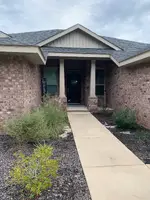
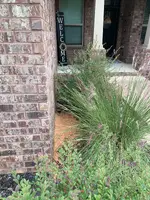
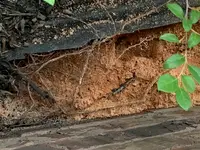
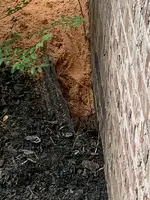
@Billm Digging within 6’ is infuriating. They favor bushes and hedges. This looks fresh. I’d be looking for more holes around your property. Eventually you’re going to see this animal. It’s really just a matter of understanding when they come out. Try staking out the area just as the sun is setting low on the horizon. I suggest that you stakeout the yard for about an hour to 90 mins. I also suggest that you turn off all outside lights if you are equipped for night hunting with a thermal scanner and a NV scope or rifle mounted light. They respond mostly to sound and shadows that interrupt light within their line of sight. Once you put a light on them, don’t take it off of them unless they start running. If they run, do what you can to shoot them. Also expect them to run towards a hole or in some bushes/cover. Once they know you’re there you can make noise and shadows really aren’t much of a concern at that point. Are you able to walk around your house periodically within that hour?
Billm
Grand HAMster
- Original poster
- #77
Yep. I just went a picked up a new cellular camera, picked out a trap if necessary and planning on an all nighter tonight.@Billm Digging within 6’ is infuriating. They favor bushes and hedges. This looks fresh. I’d be looking for more holes around your property. Eventually you’re going to see this animal. It’s really just a matter of understanding when they come out. Try staking out the area just as the sun is setting low on the horizon. I suggest that you stakeout the yard for about an hour to 90 mins. I also suggest that you turn off all outside lights if you are equipped for night hunting with a thermal scanner and a NV scope or rifle mounted light. They respond mostly to sound and shadows that interrupt light within their line of sight. Once you put a light on them, don’t take it off of them unless they start running. If they run, do what you can to shoot them. Also expect them to run towards a hole or in some bushes/cover. Once they know you’re there you can make noise and shadows really aren’t much of a concern at that point. Are you able to walk around your house periodically within that hour?

Danman
Grand HAMster

Last edited:
Well the sign in front of your house does say 'welcome'Yep. I just went a picked up a new cellular camera, picked out a trap if necessary and planning on an all nighter tonight.
 ...sorry couldn't resist.
Burrowing 6 feet from where you were sitting....that's more than mockery! Definitely gonna have to stay up tonight. At that range, I'd almost recommend a red dot lazer, but your were saying illegal to use!?
Billm
Grand HAMster
- Original poster
- #79
No their legalWell the sign in front of your house does say 'welcome'
Burrowing 6 feet from where you were sitting....that more than mockery! Definitely gonna have to stay up tonight. At that range, I'd almost recommend a red dot lazer, but your were saying illegal to use!?
Billm
Grand HAMster
- Original poster
- #80
Last edited:
Well, I am flabbergasted, perplexed, whatever you want to call it. So I‘ve been setting up the new camera. Poor cellular signal. I started at 1130pm. I walked around the house,no new signs. I went in the garage for twenty minutes or so and reset the camera. Walked over by the front door where the new hole is. What do I see: a friggin fat rabbit. Coincidence? I’ve never seen a rabbit put hundreds of holes in a lawn before. I’m guessing I may have both.
Similar threads


- Replies
- 1
- Views
- 65


