

After years of chasing precision with big-bore airguns and centerfire rifles, I’ve finally retired the Caldwell Lead Sled—especially the DFT 2—from my zeroing routine. It wasn’t a sudden decision. It came from hard-earned experience, logged data, and a growing frustration with inconsistent point of impact (POI) shifts that didn’t match real-world shooting conditions.
At first glance, the Lead Sled seems like a recoil-taming solution. But for those of us who care about repeatable POI, cheek weld indexing, and field-relevant feedback, it introduces more problems than it solves:
 The Problem with Lead Sleds
At first glance, the Lead Sled seems like a recoil-taming solution. But for those of us who care about repeatable POI, cheek weld indexing, and field-relevant feedback, it introduces more problems than it solves: - Restricted Recoil Flow: The sled halts natural rearward movement, causing the fore-end to bounce or torque. That disrupts barrel harmonics and throws off POI.
- Scope Stress: With big-bore airguns like the Texan .308 or AEA .357, the abrupt stop can transfer shock directly into your optics. I’ve seen reticles shift and internals fail.
- Unrealistic Shooting Position: You can’t replicate your natural hold or cheek weld. That means your eye relief and scope view are inconsistent—leading to false zeros.
- Weight Shift & Micro-Movement: Even with the tray loaded, weights can shift mid-session. That introduces subtle instability you won’t notice until your groups start wandering.
What Works Instead
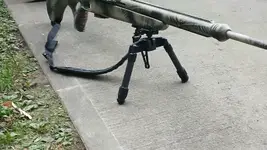
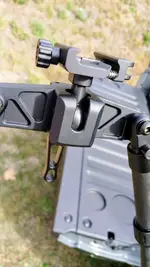
I’ve gone back to the tried-and-true: a modular bipod and rear bag setup. My current rig includes the Linkogear HB-C03 bipod paired with a custom foam rear rest. This setup allows:- Natural recoil flow
- Consistent cheek weld and eye box
- Real-world feedback on POI shifts
- Field adaptability across terrain and shooting positions