Install the app
How to install the app on iOS

Follow along with the video below to see how to install our site as a web app on your home screen.

Note: This feature may not be available in some browsers.

Why I No Longer Use a Lead Sled to Zero My Rifles

Grunt64

HAM Ranger
650
2,122
HAM Points
2,869.00
Country flag
After years of chasing precision with big-bore airguns and centerfire rifles, I’ve finally retired the Caldwell Lead Sled—especially the DFT 2—from my zeroing routine. It wasn’t a sudden decision. It came from hard-earned experience, logged data, and a growing frustration with inconsistent point of impact (POI) shifts that didn’t match real-world shooting conditions.

❌ The Problem with Lead Sleds​

At first glance, the Lead Sled seems like a recoil-taming solution. But for those of us who care about repeatable POI, cheek weld indexing, and field-relevant feedback, it introduces more problems than it solves:

  • Restricted Recoil Flow: The sled halts natural rearward movement, causing the fore-end to bounce or torque. That disrupts barrel harmonics and throws off POI.
  • Scope Stress: With big-bore airguns like the Texan .308 or AEA .357, the abrupt stop can transfer shock directly into your optics. I’ve seen reticles shift and internals fail.
  • Unrealistic Shooting Position: You can’t replicate your natural hold or cheek weld. That means your eye relief and scope view are inconsistent—leading to false zeros.
  • Weight Shift & Micro-Movement: Even with the tray loaded, weights can shift mid-session. That introduces subtle instability you won’t notice until your groups start wandering.

What Works Instead​

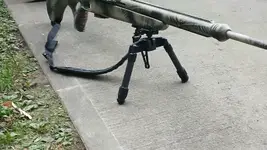
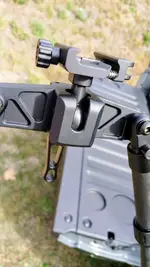
I’ve gone back to the tried-and-true: a modular bipod and rear bag setup. My current rig includes the Linkogear HB-C03 bipod paired with a custom foam rear rest. This setup allows:

  • Natural recoil flow
  • Consistent cheek weld and eye box
  • Real-world feedback on POI shifts
  • Field adaptability across terrain and shooting positions

Final Thoughts​

If you’re serious about precision, ditch the sled.

@Grunt64 Great points about the consistent cheek weld and shooting positions. I hadn't considered the natural recoil flow. Good points.
 
Thank you, I didn't realize how much it changed my shooting position either until recently trying to zero a scope.

@Grunt64 I like the idea of using a shooting rest to get on paper or even close to zero with a new scope, but bags or a bipod bag combos seems to work well because it helps to at least let you fine tune your zero by affording you the comfort of a more natural shooting position and the cheek weld you’ll use when shooting. I’ve zeroed a scope or two off of a tripod. Granted I’m not a precision or long distance shooter, it seems to have worked well enough. At least when it came time to shoot, I knew my hold and cheek weld would be pretty much the same.
 
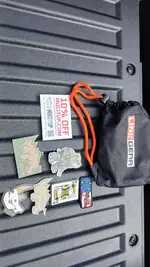
The bipod made by Linkogear, HB- co3 carbon fiber, picatinny & arca monorail and a rear bag. Like night and day when zeroing.
 

Attachments

  • 20250919_101841.webp
    20250919_101841.webp
    813.7 KB · Views: 5
  • 20250919_183608.webp
    20250919_183608.webp
    225.6 KB · Views: 5
  • 87a8c23f-32c1-4262-a486-47142f97aa4e~1 (1).webp
    87a8c23f-32c1-4262-a486-47142f97aa4e~1 (1).webp
    106.6 KB · Views: 3

Create an account or login to comment

You must be a member in order to leave a comment

Create FREE account

Create a FREE account on our community. It's easy!

Log in

Already have an account? Log in here.

Trending in this forum

Back
Top