
Grackles are hard to shoot, unless there is water around. Then, once you shoot at them, they fly much further away. Most of the alfalfa fields are watered with very large pivots, often 300 to 400 yards long. Great fun exercising one's skill at shooting grackles far, far away. The same goes for jackrabbits, because if they see you, they're long gone! Distance, is thus, a necessity of sorts.

Install the app
How to install the app on iOS
Follow along with the video below to see how to install our site as a web app on your home screen.

Note: This feature may not be available in some browsers.
You are using an out of date browser. It may not display this or other websites correctly.
You should upgrade or use an alternative browser.
You should upgrade or use an alternative browser.
Why are airgun manufacturers still using choked barrels?
- Thread starter Bladebum
- Start date
- Latest activity Latest activity:
- Replies 51
- Views 11K

CTAirgunner
HAM Wizard

Grackles are hard to shoot, unless there is water around. Then, once you shoot at them, they fly much further away. Most of the alfalfa fields are watered with very large pivots, often 300 to 400 yards long. Great fun exercising one's skill at shooting grackles far, far away. The same goes for jackrabbits, because if they see you, they're long gone! Distance, is thus, a necessity of sorts.
Starlings are pretty similar and I found it quite easy to get within 50 yards or less of starlings, I doubt a grackle will be running off when you are 75 yards from it.
I think that admitting a 30% success rate would be enough to warrant that that shot should have a second thought on a living creature bird, mouse, moose, whatever. Thats just me though.


Don't want to change the topics subject and it is not up to me what you can do, but since you mention a succes rate of 30%, thats quite shocking. If you can hit a golf ball 10/10 times at 300-400 yards then go to that distance but if you can't stick to your limits. No one wants to wound quarry, we all look for a clean kill. Animals are not fun practice targets. Really makes me sad tbh.Grackles are hard to shoot, unless there is water around. Then, once you shoot at them, they fly much further away. Most of the alfalfa fields are watered with very large pivots, often 300 to 400 yards long. Great fun exercising one's skill at shooting grackles far, far away. The same goes for jackrabbits, because if they see you, they're long gone! Distance, is thus, a necessity of sorts.
And as far as i know Grackles are a protected species all around the US.

AtlasAirguns
Good Plus Level Advertiser

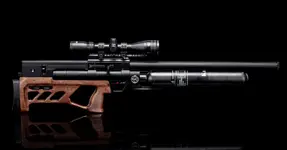
I have a handful of unchoked Kalibrgun 70s coming in...and a bunch of slugs to test out. Wish me luck Godspeed 
Hare
New member
My logic tells me the choke ensures maximum chamber pressure before the pellet exits the bore and likely aids in proper valve timing.

Bladebum
HAM Sniper
- Original poster
- #28
I have not found this to be the case at all, as my most accurate and consistent gun with both pellets and slugs is unchoked and has a 15" barrel. As stated, a gun should be tuned for a projectile so that the valve is closed by the time that pellet(and especially slug) leaves the barrel. Otherwise its inefficient and accuracy suffers, regardless of choked or not.My logic tells me the choke ensures maximum chamber pressure before the pellet exits the bore and likely aids in proper valve timing.
In springers, a choke can have the effect your talking about. But many people have been known to remove the choke in springers with no ill effect on accuracy as well.
Bladebum
HAM Sniper
- Original poster
- #29
I have a handful of unchoked Kalibrgun 70s coming in...and a bunch of slugs to test out. Wish me luck Godspeed
View attachment 1158View attachment 1159
getting slugs to shoot can be frustrating at times for sure, but being unchoked your already off to a good start. My findings with good slug accuracy with any gun, have been moderate-high reg pressure and less volume. They want to get down the barrel as quickly as possible, but not be disrupted when they leave. Also, 50 yard accuracy is a waste of time in slug land. Testing at minimum of 75, but preferably 100 or more is where you see if they are accurate or not IMO . You likely already know this info, just giving my .02 

Last edited:
I look at a choked barrel a little differently to be honest, and this is primarily because, I am concerned with a potential static imbalance in the round more than anything else. Especially in poorly made barrels, unsorted pellets, or how that pellet even enters the breach etc. Other variables may apply also.
Using a pellet in this case, the difference between the axial center of form, and the axial center of gravity of a pellet and not being concentric to one another, can become a problem if not addressed.
When a pellet travels down a barrel, it will somewhat conform to the barrel the best way it can, and it will rotate along its axial center of form or mass. However, when that round leaves the muzzle, there is a radius of gyration shift that occurs, and this happens when the round is now free of the barrel and will by default, shift from the axial center of form to the axial center of gravity. The greater the difference between the two axial centers, the greater the helical path that the round will follow. This is the corkscrew effect we see when this happens. The angle of that radius of gyration as it exits the barrel, is twist rate dependent also. The faster the twist the worse it gets.
A choke for me, is therefore, not just a sizing tool per say, but it is more about getting that round closer to match the axial center of gravity, to the axial center of form. This in-turn would hopefully minimize the possible effect of the radius of gyration discrepancies, by making everything as concentric as possible and that includes the bore.
I am not an expert in this by any stretch of the mark, it's merely my opinion on how I perceive the logic.

wolfmangreg
HAM Ranger
Woah momma, bet those can sling some lead with authority!I have a handful of unchoked Kalibrgun 70s coming in...and a bunch of slugs to test out. Wish me luck Godspeed
View attachment 1158View attachment 1159
Dana had good results with slugs in their 600mm unchoked .30, though not sure he tested past 50 yards.

Hateful McNasty
Grand HAMster
Took a minute to find it but the part. "Unintentional chokes"
Why choke a barrel? | Pyramyd Air Blog
Also

Why choke a barrel? | Pyramyd Air Blog
Also
What about choked barrels? | Pyramyd Air Blog
I don’t want to confuse you, but BB has written some things about choked barrels in the past that may not be completely accurate.
www.pyramydair.com
Hare
New member
Last edited:
Looking into the history of choked barrels, they appear to be a trade secret among many manufacturers (powder burner), unbeknownst to their customers, and aid in consistency in biathlon rifles (subject to rigorous requirements) in diverse conditions.
Applied to airguns may aid in the sub-12 rule many European shooters face.
Applied to airguns may aid in the sub-12 rule many European shooters face.
I wonder. I've owned a whole lot of firearms over the years, from cheap, single-shot 22LR, to some rather exotic calibers and arms to shoot them. But I've never owned any firearm with a choked barrel. They do exist, and one example are the 10 meter 22LF target rifles. As odd as it may sound (no pun intended), they use sub-sonic ammo! That fact should cause a bit of consternation!

Yes, match rimfire barrels are choked, but that's accomplished by taper lapping. The reduction in bore diameter is very gradual, not sudden like most airgun barrels. I find that my FX barrels are too tightly choked and foul very quickly. I wish the choking was a little less or more gradual at the muzzle end.Agreed. Debunking the myth slugs only shoot well from unchoked barrels. The best rimfire barrels are choked. Unless theres a definite standard for projectile size and any variations in barrel are sorted, chokes are a stay to balance out these issues. Unchoked only makes sense when the projectiles diameter is properly sized for the bore imho.
I have a question about your liner experiences. I have both an Impact Mk II and a Mk III. The Mk II has had about 7,000 rounds of pellets through its original 1:24 twist liner. The Shrouded unit (1:18 twist) I replaced the original with, has had close to 20,000 NSA slugs shot through it. The Mk III's tensioned barrel/liner (1:18 twist) is nearing 25,000 NSA slugs shot through it. I have NEVER cleaned any of the liners, save when I installed them. I've never experienced any fouling, loss of accuracy, or any other issue related to liners. My shooting partner has shot about 10,000 rounds through his Impact Mk III (1:24 twist), and has the same experiences I have had. So what kind of ammo are you using, because you are one of only a couple I have heard about having fouling issues with an FX liner?
By the way, the .250 caliber's choke is .005 inches.
By the way, the .250 caliber's choke is .005 inches.

prior to these modrn rifle a smaller pellet was probably best but these these i have wundered if a longer heavery pellet would not prefor better these mentioned reasons? i asume slugs can be pushed fatser and maintatin acurecy because it is less likley to incur these formentioned issues?I look at a choked barrel a little differently to be honest, and this is primarily because, I am concerned with a potential static imbalance in the round more than anything else. Especially in poorly made barrels, unsorted pellets, or how that pellet even enters the breach etc. Other variables may apply also.
Using a pellet in this case, the difference between the axial center of form, and the axial center of gravity of a pellet and not being concentric to one another, can become a problem if not addressed.
When a pellet travels down a barrel, it will somewhat conform to the barrel the best way it can, and it will rotate along its axial center of form or mass. However, when that round leaves the muzzle, there is a radius of gyration shift that occurs, and this happens when the round is now free of the barrel and will by default, shift from the axial center of form to the axial center of gravity. The greater the difference between the two axial centers, the greater the helical path that the round will follow. This is the corkscrew effect we see when this happens. The angle of that radius of gyration as it exits the barrel, is twist rate dependent also. The faster the twist the worse it gets.
A choke for me, is therefore, not just a sizing tool per say, but it is more about getting that round closer to match the axial center of gravity, to the axial center of form. This in-turn would hopefully minimize the possible effect of the radius of gyration discrepancies, by making everything as concentric as possible and that includes the bore.
I am not an expert in this by any stretch of the mark, it's merely my opinion on how I perceive the logic.
Last edited:
It can happen to any round, not just pellets. Poor seating, and a poor transition from the breach to the barrel, could shift the axial center of form out of concentricity. Just a slight angle on the round when it enters the barrel, can impart and exaggerate the issue. To what degree? That depends again on how far apart the two axial centers are. A longer round you would think would help with alignment, but unfortunately, once the rifling takes its initial bite on the round, it will conform accordingly and in some cases just impart a worse imbalance. It’s there whether you actually see the effect or not. The hope is to have that helical path with both static and dynamic stability, so that the helical path diverges to a clean point of impact. Meaning, it starts off with a large arc of rotation that gradually gets smaller and smaller.prior to these modrn rifle a smaller pellet was probably best but these these i have wundered if a longer heavery pellet would not prefor better these mentioned reasons? i asume slugs can be pushed fatser and maintatin acurecy because it is less likley to incur these formentioned issues?
That’s how I understand it, and again, definitely not an expert, so take from it what you will


There is another issue with concentricity of bore and projectile, that few realize much less know about.
Most (PCP) airguns use suppressors. The most important need when doing so, is making sure the projectile is perfectly centered in the suppressor bore—hence concentricity. Even a slight deviation can cause projectile deflection. I suspect this is one of the reasons, some contest bench shooters don't use suppressors.
Most (PCP) airguns use suppressors. The most important need when doing so, is making sure the projectile is perfectly centered in the suppressor bore—hence concentricity. Even a slight deviation can cause projectile deflection. I suspect this is one of the reasons, some contest bench shooters don't use suppressors.
I primarily shoot a MK3 in 22 cal with a 700 mm barrel with FX Hybrid slugs at 935 fps. Sometimes NSA 23 gr in .217 diameter. After shooting a 100 yd EBR style match where I might shoot 125-150 shots, I'll clean the gun when I get home and the first couple of patches will have lead flakes on them. I notice that I get wierd flyers toward the end of the match so I run a patch through between cards just to make sure. I also had this experience on a Dreamline Tact Compact in .177. It was worse on that one. I can't believe you've shot your gun that many rounds without cleaning. Even if I didn't get any lead flakes on the patches, I get plenty of black residue on all my guns. Clean yours and let me know what you get. BTW, polishing the bore with JB paste doesn't make any difference. FX liners are too tightly choked.I have a question about your liner experiences. I have both an Impact Mk II and a Mk III. The Mk II has had about 7,000 rounds of pellets through its original 1:24 twist liner. The Shrouded unit (1:18 twist) I replaced the original with, has had close to 20,000 NSA slugs shot through it. The Mk III's tensioned barrel/liner (1:18 twist) is nearing 25,000 NSA slugs shot through it. I have NEVER cleaned any of the liners, save when I installed them. I've never experienced any fouling, loss of accuracy, or any other issue related to liners. My shooting partner has shot about 10,000 rounds through his Impact Mk III (1:24 twist), and has the same experiences I have had. So what kind of ammo are you using, because you are one of only a couple I have heard about having fouling issues with an FX liner?
By the way, the .250 caliber's choke is .005 inches.
Similar threads

- Replies
- 4
- Views
- 598


- Article
- Replies
- 13
- Views
- 812

- Replies
- 10
- Views
- 1K


