Install the app
How to install the app on iOS

Follow along with the video below to see how to install our site as a web app on your home screen.

Note: This feature may not be available in some browsers.

PCP A RAW and in.357? Not a gun i would normally be looking at!

Danman

Grand HAMster
3,713
9,905
Ontario, Canada
HAM Points
11,303.75
Country flag
Last edited:
Good day all, I have been hunting for a larger caliber pcp for a while now; my current 4 airguns are all 177 & .22 and range from 12fpe to 53fpe, serving me fairly well.
I've looked at .25, .30, and .357(max) in my quest as options for my usage (50-100Y bench, dealing with the odd large pest, fun factor vs water jugs/inert targets, spinners, etc)
In my glorious country moderators are forbidden, so i am aware this thing will be LOUD, long, and probably heavy, I am totally fine with all this.
I would not be benching it on my property, maybe just the odd pesting shot, I have 2 other places nearby that I shoot at as well and am always looking for more.
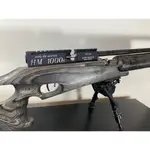
This airgun in question is a used Rapid Air Weapons HM1000X LRT, so pre-Airforce. I did some math and to get one custom made now, and shipped to me would be around $4k(cdn), this one is listed @ $1600, and again a beautiful LH stock. I plan to email the dealer for more details this week, the gun has been available for over half a year.....

So I have 2 questions here:

-First and foremost who has owned RAW rifles, how is servicing/parts for them, accuracy, shot count? This one has a massive claimed 220fpe....It may very well be unregulated?!

-Second what are your thoughts on a .357 air rifle in general vs say a .25/.30cal?! I gravitate more to the .25/.30 for ammo selection i will admit.
 

Attachments

  • rapid-air-worx-pre-owned-raw-hm100x-lrt-357-cal.webp
    rapid-air-worx-pre-owned-raw-hm100x-lrt-357-cal.webp
    26.7 KB · Views: 11
love your choice of rifles. I would have it in my safe at that price so fast that it would make your head spin!
My only hold back is LH, I’m RH and may as well have all thumbs on my left.
I believe that the .357 is a fair amount more thirsty for air than the .30, but that is just from reading bits here & there.
New ones are running +- $1900.00 USD and the .30 is the next one on my list.
Best of luck to you!
 
Good day all, I have been hunting for a larger caliber pcp for a while now; my current 4 airguns are all 177 & .22 and range from 12fpe to 53fpe, serving me fairly well.
I've looked at .25, .30, and .357(max) in my quest as options for my usage (50-100Y bench, dealing with the odd large pest, fun factor vs water jugs/inert targets, spinners, etc)
In my glorious country moderators are forbidden, so i am aware this thing will be LOUD, long, and probably heavy, I am totally fine with all this.
I would not be benching it on my property, maybe just the odd pesting shot, I have 2 other places nearby that I shoot at as well and am always looking for more.
This airgun in question is a used Rapid Air Weapons HM1000X LRT, so pre-Airforce. I did some math and to get one custom made now, and shipped to me would be around $4k(cdn), this one is listed @ $1600, and again a beautiful LH stock. I plan to email the dealer for more details this week, the gun has been available for over half a year.....

So I have 2 questions here:

-First and foremost who has owned RAW rifles, how is servicing/parts for them, accuracy, shot count? This one has a massive claimed 220fpe....It may very well be unregulated?!

-Second what are your thoughts on a .357 air rifle in general vs say a .15/.30cal?! I gravitate more to the .25/.30 for ammo selection i will admit.
As a .357 it’s actually one of the lower‑powered ones out there. There are .30 cals that make more FPE than that RAW does.
 
Good day all, I have been hunting for a larger caliber pcp for a while now; my current 4 airguns are all 177 & .22 and range from 12fpe to 53fpe, serving me fairly well.
I've looked at .25, .30, and .357(max) in my quest as options for my usage (50-100Y bench, dealing with the odd large pest, fun factor vs water jugs/inert targets, spinners, etc)
In my glorious country moderators are forbidden, so i am aware this thing will be LOUD, long, and probably heavy, I am totally fine with all this.
I would not be benching it on my property, maybe just the odd pesting shot, I have 2 other places nearby that I shoot at as well and am always looking for more.
This airgun in question is a used Rapid Air Weapons HM1000X LRT, so pre-Airforce. I did some math and to get one custom made now, and shipped to me would be around $4k(cdn), this one is listed @ $1600, and again a beautiful LH stock. I plan to email the dealer for more details this week, the gun has been available for over half a year.....

So I have 2 questions here:

-First and foremost who has owned RAW rifles, how is servicing/parts for them, accuracy, shot count? This one has a massive claimed 220fpe....It may very well be unregulated?!

-Second what are your thoughts on a .357 air rifle in general vs say a .15/.30cal?! I gravitate more to the .25/.30 for ammo selection i will admit.
I’d go for the .15. It might have collectors value. I doubt too many airgunners have seen a .15.

Sorry, I couldn’t resist.🤣😂🤣
 
Last edited:
As a .357 it’s actually one of the lower‑powered ones out there. There are .30 cals that make more FPE than that RAW does.
I dont love anemic (for the caliber) airguns myself, but....this Raw is somehow not?!
220fpe is no joke, thats more than the .357 800mm barreled FX M4 @150ish fpe (which has no business being offered in .357?) Regulated Raws seem to float around 100-140fpe from everything I've been reading, slinging Jsb 81grain pellets. I see a super long barrel, so that could be part of it? One of the things I will ask dealer about for sure.
@Zelos1 It is definitely a classic, and a way nicer stock than the newer generation AF ones imo. Its not a gun I'd be shooting weekly lol (and I may spring for a 2L bottle for 'range days')!
I generally expect 100fpe out of a 30 and 150 out of a 357 minimum for a full size pcp these days. About every week I check the used section and every time its there....and then my gears turn....I mean I have a compressor now😆

@Billm.....think of all the shots per fill you'd get with a .15, I'd be loading pellets backwards for sure.🤣
 
I dont love anemic (for the caliber) airguns myself, but....this Raw is somehow not?!
220fpe is no joke, thats more than the .357 800mm barreled FX M4 @150ish fpe (which has no business being offered in .357?) Regulated Raws seem to float around 120-140fpe from everything I've been reading, slinging Jsb 81grain pellets. I see a super long barrel, so that could be part of it? One of the things I will ask dealer about for sure.
@Zelos1 It is definitely a classic, and a way nicer stock than the newer generation AF ones imo. Its not a gun I'd be shooting weekly lol (and I may spring for a 2L bottle for 'range days')!
I generally expect 100fpe out of a 30 and 150 out of a 357 minimum for a full size pcp these days. About every week I check the used section and every time its there....and then my gears turn....I mean I have a compressor now😆

@Billm.....think of all the shots per fill you'd get with a .15, I'd be loading pellets backwards for sure.🤣
220 FPE is respectable, but it’s still not in the same performance class as a true big‑bore. My .308 Texan makes 450–470 FPE with 150‑grain slugs, so the RAW .357 is literally half the energy. It’s a beautifully built rifle, just not a high‑power .357 platform.
 
As a .357 it’s actually one of the lower‑powered ones out there. There are .30 cals that make more FPE than that RAW does.
@Danman I agree with this statement. I wouldn’t spend money on a .357 RAW. Looked into them a while back and decided it was a no-go in .357. They are fine air rifles, pleasant to shoot, and with access to Martin Rutterford you can request varied services from him at Home
 
Last edited:
@Danman I agree with this statement. I wouldn’t spend money on a .357 RAW. Looked into them a while back and decided it was a no-go in .357. They are fine air rifles, pleasant to shoot, and with access to Martin Rutterford you can request varied services from him at Home
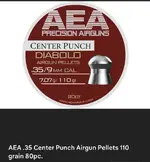
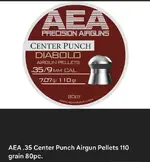
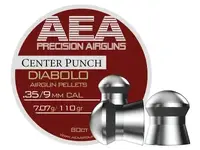
I believe this must have been modified to reach this power level. What i dont love about it is that its a bit of an odd duck for sure. They dont list a .357, you have to call and custom order one in that caliber. 120fpe is laughable on a .357, 220fpe is respectable. Wouldn't use it on large game/hunting (completely illegal here anyways with airguns🙄) but it does seem plenty powerful, for reference that would be an 81gr pellet going just over 1100fps, OUCH. If its a slug only gun....thats a whole other path I dont really want to go down🤔 I do see AEA makes a heavy 110Gr .357 pellet now....ill keep this thread updated with what I find out!
 
I believe this must have been modified to reach this power level. What i dont love about it is that its a bit of an odd duck for sure. They dont list a .357, you have to call and custom order one in that caliber. 120fpe is laughable on a .357, 220fpe is respectable. Wouldn't use it on large game/hunting (completely illegal here anyways with airguns🙄) but it does seem plenty powerful, for reference that would be an 81gr pellet going just over 1100fps, OUCH. If its a slug only gun....thats a whole other path I dont really want to go down🤔 I do see AEA makes a heavy 120Gr .357 pellet now....ill keep this thread updated with what I find out!
Just a quick clarification on the ammo — AEA doesn’t make a 120gr .357 pellet. Their heaviest actual pellet is still the 81gr. The 120gr you’re seeing is from Texoma Precision Pellet, and it’s what’s called a heavy‑skirted slug. It has a solid nose and a deep hollow base with a thick skirt that flares under pressure. They’re made for mid‑power .357 PCPs that can’t push a full solid slug fast enough. Decent quality, but not the same as NSA or Griffin, and not a true pellet or a high‑BC slug.
Shop - Texoma Precision Pellet

Get your reading glasses on, lol — I have to admit I’d never even heard of Texoma Precision Pellet or their 120‑grain heavy‑skirted slug until it came up in this thread, so thanks to Danman for pointing it out. It's really a very specific type of projectile most shooters don’t run into: a heavy‑skirted slug. It sits right between a true diablo pellet and a solid slug. The nose is solid like a slug, but the rear has a deep hollow cavity with a thick skirt that flares under pressure, giving you easier sealing and stabilization in mid‑power .357 PCPs that can’t push a full‑weight solid slug fast enough. That’s why it looks pellet‑ish from the base but doesn’t behave like a pellet at all. AEA themselves don’t make anything heavier than their 81‑grain pellet — the 120‑grain is made by Texoma, a small Texas boutique shop that produces heavy skirted slugs and mid‑weight solids for .357 and .457 rifles. Their quality is middle‑tier: consistent weights, decent skirts, and good short‑range performance, but not the polished finish or long‑range BC you get from NSA, Griffin, or Hunters Supply. They’re basically short‑range thumpers for guns that need something heavier than a pellet but can’t drive a true slug to full potential.
Lol, Meant 110gr...but yeah its definitely a ton heavier than 81gr offerings. Obviously I wouldn't expect an 81gr pellet to be accurate anywhere near 1100fps. I see the FX hybrids also exist in .357.
 

Attachments

  • PY-P-5005_AEA-Precision-Center-Punch_1753127909_d_400x300.webp
    PY-P-5005_AEA-Precision-Center-Punch_1753127909_d_400x300.webp
    10.9 KB · Views: 5
Lol, Meant 110gr...but yeah its definitely a ton heavier than 81gr offerings. Obviously I wouldn't expect an 81gr pellet to be accurate anywhere near 1100fps. I see the FX hybrids also exist in .357.
Yeah, the 110gr makes more sense, but anything in that 110–120gr range isn’t a pellet. AEA still tops out at 81gr for true diabolo pellets. The 110–120gr stuff is Texoma’s heavy‑skirted slug design—solid nose, deep hollow base, thick skirt that flares under pressure. They can be accurate, but only when the gun has the right twist and enough power to flare the skirt. Same deal with the 81gr pellets: they can be accurate too, but not anywhere near 1100 fps. Pellets and heavy‑skirted slugs live in completely different stability zones, so you can’t judge them the same way. I’m glad to see the .357 getting more attention, though. I’ll stay with real slugs myself, but at least there are choices now for guys who don’t want to run them.
 
Yeah, the 110gr makes more sense, but anything in that 110–120gr range isn’t a pellet. AEA still tops out at 81gr for true diabolo pellets. The 110–120gr stuff is Texoma’s heavy‑skirted slug design—solid nose, deep hollow base, thick skirt that flares under pressure...
@Grunt64 When did weight become a factor in determining whether or not a projectile is a pellet as opposed to a slug (or something else)?
 
in determining whether or not a projectile is a pellet as opposed to a slug (or something else)?
The only reason weight even came up is because once you get into the 110–120gr range in .357, the diabolo shape physically can’t exist anymore — the skirt would collapse and the waist would fail. That’s why AEA tops out at 81gr for true pellets. Anything heavier has to be a slug‑style design, like the Texoma heavy‑skirted slugs with a solid nose and deep hollow base. So no one said weight determines the category — the design does. The weight just makes the design difference obvious.
 
I’m just trying to follow the logic of this discussion to learn something new. The general definition of a pellet is wasp waist and hollow skirt. Why would the skirt collapse and the waist fail? I don’t have any reason to doubt any of this. I would just like to learn the mechanics of it. I would think the skirt would be forced outward and contained by the groove. I’m assuming that the “skirt collapsing” would mean that it’s being compressed in on itself? Surely at those velocities the skirt isn’t going to collapse in flight. How does the waist fail, isn’t it solid? Without a high speed camera like an Ember Fly, how would we know for certainty if the projectile is being drag stabilized or not? Can you easily see a .357 in flight? I can easily see a 12ga slug fly down range, but I struggle to see a .30 pellet or slug, except with IR night vision. I’m not arguing either side.
 
I’m just trying to follow the logic of this discussion to learn something new. The general definition of a pellet is wasp waist and hollow skirt. Why would the skirt collapse and the waist fail? I don’t have any reason to doubt any of this. I would just like to learn the mechanics of it. I would think the skirt would be forced outward and contained by the groove. I’m assuming that the “skirt collapsing” would mean that it’s being compressed in on itself? Surely at those velocities the skirt isn’t going to collapse in flight. How does the waist fail, isn’t it solid? Without a high speed camera like an Ember Fly, how would we know for certainty if the projectile is being drag stabilized or not? Can you easily see a .357 in flight? I can easily see a 12ga slug fly down range, but I struggle to see a .30 pellet or slug, except with IR night vision. I’m not arguing either side.
I watch my .22 pellets in flight all the time....old age eyes haven’t struck yet! Plain and simple AEA makes a 110gr pellet and calls it a pellet, thereby it is a pellet, Pyramyd air sells em to boot. It probably looks similar to a 33gr JSB beast (.22) pellet, but it is....still a pellet. @Grunt64 i had a look at those Texoma pellets....they sure look like slugs to me!?

My goals would be simple if I bought this gun; can It achieve 900- 950fps with an 81gr pellet (or about 160fpe) for 100Y bench, if not im out....I would pit it against my Ghost with its slug barrel, just for fun.
AEAC (Steve) has an old video of a red .357 Raw, and while gorgeous it is abit of a dog in the power department.
 
Last edited:
The only reason weight even came up is because once you get into the 110–120gr range in .357, the diabolo shape physically can’t exist anymore — the skirt would collapse and the waist would fail. That’s why AEA tops out at 81gr for true pellets. Anything heavier has to be a slug‑style design, like the Texoma heavy‑skirted slugs with a solid nose and deep hollow base. So no one said weight determines the category — the design does. The weight just makes the design difference obvious.
@Grunt64 Do you have any evidence to support your claim quoted above in bold type?

My understanding of diabolo pellets comes from explanations similar to what’s in the link posted below.
IMG_2172.webp

Not to mention that the pellets you claim cannot exist in the shape of diabolo pellets are advertised as diabolo pellets.

IMG_2173.webp

 
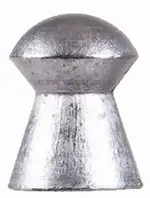
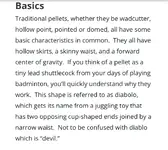
Ok, I will say you're testing how well I can explain this:rolleyes:.A true diabolo pellet has a very specific shape: a thin hollow skirt that can flare, a narrow waist, and a forward center of gravity. That shuttlecock‑style geometry is what makes a pellet drag‑stabilized. Once you push a .35 projectile up into the 110‑grain range, that geometry can’t exist anymore—the skirt has to thicken, the waist disappears, and the balance shifts rearward. At that point it becomes a hollow‑base slug, even if the tin calls it a diabolo. You can see the difference clearly in these two pictures: the first is a real diabolo pellet with the thin skirt and narrow waist, and the second is the 110‑grain AEA design, which doesn’t follow those basic diabolo requirements.

9mm/357 PELLETS - Texoma Precision Pellet The term pellets is used very loosely as you can see.
 

Attachments

  • OIP basic pellet.webp
    OIP basic pellet.webp
    5.6 KB · Views: 0
  • IMG_2173 357 pellet.webp
    IMG_2173 357 pellet.webp
    38.2 KB · Views: 0
Ok, I will say you're testing how well I can explain this:rolleyes:...
@Grunt64 Not at all. I'm seeking factual information supporting your claim. It seems that what you're attempting to explain is a conclusion that you've drawn based upon...I don't know. I say that based upon how you are presenting your claims. Who has the authority to set the parameters governing how airgun projectiles are classified? Do you? Professional ballisticians (sp?)? Projectile manufacturers? Who is mandating that heavy pellets (or any pellets) have to have thin skirts?

In older writings, I've read all sorts of lead airgun projectiles being described as "pellets." However, in this discussion we're referring to diabolo pellets.
 
I’m just trying to follow the logic of this discussion to learn something new. The general definition of a pellet is wasp waist and hollow skirt. Why would the skirt collapse and the waist fail? I don’t have any reason to doubt any of this. I would just like to learn the mechanics of it. I would think the skirt would be forced outward and contained by the groove. I’m assuming that the “skirt collapsing” would mean that it’s being compressed in on itself? Surely at those velocities the skirt isn’t going to collapse in flight. How does the waist fail, isn’t it solid? Without a high speed camera like an Ember Fly, how would we know for certainty if the projectile is being drag stabilized or not? Can you easily see a .357 in flight? I can easily see a 12ga slug fly down range, but I struggle to see a .30 pellet or slug, except with IR night vision. I’m not arguing either side.
The design of a true diabolo pellet can’t scale much past about 81 grains in .357. Once you go heavier, the skirt has to be made thicker or the PSI from most .357 PCPs will blow out a thin pellet skirt. And as soon as you thicken the skirt, the diabolo shape is gone—the waist widens, the balance shifts rearward, and it stops behaving like a drag‑stabilized pellet. At that point it’s a hollow‑base slug, even if the tin calls it a pellet.
 

Create an account or login to comment

You must be a member in order to leave a comment

Create FREE account

Create a FREE account on our community. It's easy!

Log in

Already have an account? Log in here.

Trending in this forum

Back
Top