


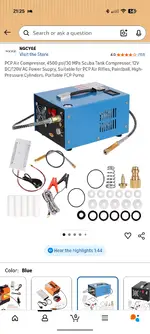
Over the years I’ve owned a fair number of compressors in that $300–$1,000 range — Vevors, Yong Hengs, and even one of the “premium” Tuxing models with the sealed radiator cooling system, auto‑stop, and all the bells and whistles. It looked impressive on the outside, but it still failed at the same weak point they all share: the connecting rod.
I had bought an Assurance plan through Amazon, and the failure happened inside the warranty window. But once it broke, neither Tuxing nor Assurance would stand behind it. Assurance eventually told me the policy should never have been sold in the first place, refunded the plan, and I was left stuck with a dead compressor.
After that, I changed my approach. When I ordered my second unit, I bought the stripped‑down version and added my own FASTTOBUY external cylinder and filtration. That setup has been far more reliable than the expensive one ever was. The truth is, the filtration and moisture control you add yourself is always better than whatever these machines claim to have internally.
And that leads to the bigger point:There’s a reason the $300–$1,000 compressor market never really improves. All of these units — no matter the shell, display, radiator, or marketing language — share the same internal parts. Same rods, same pistons, same bearings, same tiny separator. The price difference is mostly the housing and the features, not the internals.
There’s no real jump in quality until you hit the $3,000–$5,000 industrial tier. That’s where you finally get forged rods, proper bearings, real filtration, and actual support. Everything below that is just variations of the same design, and that $300–$1,000 range is probably where most of the profit is made. It’s cheap enough for most shooters to buy, expensive enough for the manufacturers to make money, and unreliable enough that people end up buying another one. For what it’s worth, I’ve always run a proper reciprocating compressor oil, not motor oil, and I keep my operating temps below 120 degrees. I rotate compressors, change oil regularly, and use external filtration. In other words, I don’t abuse these machines — I maintain them the way they’re supposed to be maintained. Even with all that, the “premium” unit still failed at the connecting rod, which tells you the weak point isn’t the user, it’s the design.
That’s been my experience, and I figured others here might have seen the same pattern.



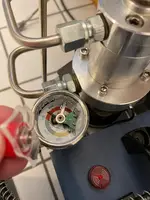


 . The companies history, product support, maintenance & repair videos, etc sealed the deal for me. Build quality inside and out is solid, there isn't a chinese made part on it i am told.


