
Install the app
How to install the app on iOS

Follow along with the video below to see how to install our site as a web app on your home screen.

Note: This feature may not be available in some browsers.

Self-Loading Western Rattler w/Nocpix ACE S60R Thermal Sight-In

Ezana4CE

Master HAMster
1,799
3,936
Texas
HAM Points
5,675.75
Airguns of Arizona - 10% discount
Country flag
I’d been procrastinating like I don’t know what about exploring this scope.
IMG_5225.webp

I tried earlier in the week and it rained that evening. So I took a couple of hours to set up this scope, zero it, and do some shooting. I was even entering data into the ballistic calculator. I’ve never used one before. I still need to verify a couple of things. I gathered DOPE from 25 to 60 yards away mostly in the dark. I like to use frozen gel packs as targets in warm weather. They show up the opposite color as your color pallet setting on the scope.

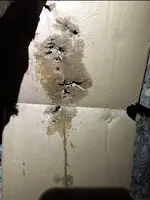
I ended up placing cardboard behind the ice pack to keep track of my shots while shooting in the dark. I tried a couple of hold overs and was actually surprised at how far out I got and was still able to maintain my hold based upon my 25 yard zero. Not too bad for night time target shooting. I shot standing behind my tripod.
IMG_5242.webp

Fun times.
 
So far I like this scope. The controls are pretty intuitive. I like having options to zoom. The definition is top Bitcoin to me. This thing has a 60mm objective, 1280 x 1025 pixel sensor, <15mk NETD sensor sensitivity, a 2560 x 2560 pixel display resolution, a 1.03” AMOLED screen on the ocular end. It’s the highest level of definition as I’ve experienced in a thermal scope. The main drawback is that it weighs around 2.9 lbs. I like that it takes flat top 18650 batteries. The LRF is integrated into the objective lens so it maintains the form factor of a traditions scope. The tube is 30mm according to the manual and it comes with a cantilever mount . Next of all it has a 5 year warranty.

You can read more about the scope here.

I still haven’t found the correct sized grub screw for my buttstock in this Rattler. I’ve been shooting with it spinning around when it has no shoulder pressure to brace against it. Since nothing I’ve bought has fit, I’ll have to remove it and take it to a hardware store to see what I can find. AOA is out of suggestions. They stopped carrying the K&L buttstock for the Rattler and now have similar styled Western Airguns branded buttstock. I don’t know why they don’t upgrade these rifles to a stock buttstock that allows the owner to add a sling to the rifle. These buttstocks are around $160 on sale. I forget what I paid for mine. I’m now getting back into this rifle since it’s a convenient tool to have around. I’d still like to work out the cycling issue. Part of that is from slugs being just led free within the magazine chamber and having their bases deformed as the mag cycles. I think I documented this in another thread. This happens with NSA .357 slugs. Then I still haven’t figured out how to open the side panel to clean out and replace the factory grease. I think I’ll want to do that before winter. Other than that I still am pretty satisfied at being able to take various animals with this rifle. Eventually I’ll get back to working through these kinks.
 
Dave,

You can sight that scope in during the day fairly easily. Use a target that has red rings on them and they show up great when you zoom in to make the XY adjustments to the reticle. I start at around 6-8x and get the first couple of shots in then move up to 20x to fine tune it.
 
Dave,

You can sight that scope in during the day fairly easily. Use a target that has red rings on them and they show up great when you zoom in to make the XY adjustments to the reticle. I start at around 6-8x and get the first couple of shots in then move up to 20x to fine tune it.
@pfddi It’s already done. It was sighted in when I had time and it wasn’t hot as hell. Daylight itself wasn’t the issue. I’ll have to try the red ring trick.

I will probably be able to use assistance setting up the ballistic calculator. I’m not sure which drag model to use. I read that G1 is probably best considering it only offers G1 - G7 IIRC. Then I need to find the BC of my slugs.
 
@pfddi It’s already done. It was sighted in when I had time and it wasn’t hot as hell. Daylight itself wasn’t the issue. I’ll have to try the red ring trick.

I will probably be able to use assistance setting up the ballistic calculator. I’m not sure which drag model to use. I read that G1 is probably best considering it only offers G1 - G7 IIRC. Then I need to find the BC of my slugs.
Just let me know when you're ready. I like G1 for slugs and 100+ yard distances. And almost all BCs are calculated with G1. Here's a list for the NSA .35/.357:

Weight Base Published BC
79 gr flat base. 0.14
93 gr flat base. 0.175
108 gr. dish base. 0.18
110 gr. dish base. 0.19
125 gr. flat base. 0.16
142 gr. flat base. 0.18

NSA doesn't state the velocity any of these were measured at, which matters because a BC measured at 850 fps won't hold at 1000+
 
Just let me know when you're ready. I like G1 for slugs and 100+ yard distances. And almost all BCs are calculated with G1. Here's a list for the NSA .35/.357:

Weight Base Published BC
79 gr flat base. 0.14
93 gr flat base. 0.175
108 gr. dish base. 0.18
110 gr. dish base. 0.19
125 gr. flat base. 0.16
142 gr. flat base. 0.18

NSA doesn't state the velocity any of these were measured at, which matters because a BC measured at 850 fps won't hold at 1000+
@pfddi
Thanks. I’m shooting NSA 110 grains HPDB at around 873 fps. I’d guessed and input the BC at 0.12. Did you work these numbers out yourself?
 
@pfddi
Thanks. I’m shooting NSA 110 grains HPDB at around 873 fps. I’d guessed and input the BC at 0.12. Did you work these numbers out yourself?
These are the NSA published BCs.

BC you plug in should be verified at your own muzzle velocity: chronograph at the muzzle and at 50 or 100 yards, then back-solve the G1 BC in your calculator. Now it will work at the various ranges that you hunt. I get my average at the muzzle and then take the chrony down to 50 yards and get an average and then calculate the actual BC my gun has with the target slug. Here's how I calculate the BC:

BC ≈ D (yards) ÷ [ 7,600 × ln(V₀ / V₁) ]

Example: NSA 142 gr leaves the muzzle at 900 fps and reads 835 fps at 100 yards. ln(900/835) = 0.0750, so BC ≈ 100 ÷ (7,600 × 0.0750) = 0.175, which is right on NSA's 0.18.
 
Last edited:
These are the NSA published BCs.

BC you plug in should be verified at your own muzzle velocity: chronograph at the muzzle and at 50 or 100 yards, then back-solve the G1 BC in your calculator. Now it will work at the various ranges that you hunt. I get my average at the muzzle and then take the chrony down to 50 yards and get an average and then calculate the actual BC my gun has with the target slug. Here's how I calculate the BC:

BC ≈ D (yards) ÷ [ 7,600 × ln(V₀ / V₁) ]

Example: NSA 142 gr leaves the muzzle at 900 fps and reads 835 fps at 100 yards. ln(900/835) = 0.0750, so BC ≈ 100 ÷ (7,600 × 0.0750) = 0.175, which is right on NSA's 0.18.
@pfddi Thanks. I haven’t used a ballistic calculator before, so this is all new to me. Meantime I just had some action with a young coyote in my yard. It was after my chickens and I shot at it with my GK1. I think I missed it, if not I may have hit it once but it made it back into the woods without a chicken. I had one pellet left in the mag when it was said and done and the reservoir was at 12 mpa. Last few shots were loud. Fun stuff. I may have to work on some yotes around here at night. This Rattler setup should be up to the task.
 

Create an account or login to comment

You must be a member in order to leave a comment

Create FREE account

Create a FREE account on our community. It's easy!

Log in

Already have an account? Log in here.

Trending in this forum

Back
Top