
Install the app
How to install the app on iOS

Follow along with the video below to see how to install our site as a web app on your home screen.

Note: This feature may not be available in some browsers.

250Z 250Z tuning, mainly slugs.

I was just using the pellets to get the 1st several rounds out after swapping out the reg and opening the ports. Something cheaper to shoot meaningless shots to get the reg to settle in. Slug's are my priority, and I'm sticking with 30-32 grain.

I had a good text chat with @Airgunandy89 yesterday. His thought's of what I'm seeing are the first things that make sense to me. He told me that when you open up the ports you also need to lighten up the poppet return spring. That's is why I'm seeing the valve floating, resulting in the large variation in fps between shots with no changes. Also why the sound is all over the place. That could also be why @Cantona256 is seeing better results at 2900psi. I will try that, along with a few other pointers. Andy also said that if the aluminum in the receiver wasn't ported to match there is sill a bottleneck right in the middle. That may be another reason why a really high psi is working as it could be enough to overcome the narrower channel in the receiver and the return spring at the same time.

I've decided to make this a project gun for testing. I've got a new 250Z in Veil on the way. I'm going to dial that one in without any port mods so I have something reliable when I need it. Then I'm either going to tinker with the original myself or send it up to @Airgunandy89 to use as a test bed. I just don't have the time to be testing out these changes, learning as I go because I don't have the knowledge set to understand the results I'm seeing. So having something reliable is my priority right now. If Andy doesn't want to use it for testing then as I have time I'll tinker with it and have fun learning at my pace and at the same time, when the yotes are making a racket at 3am I'll have a gun that will do what I want it to and know it will be quiet and the slug will go where I want it to.

I have learned that this is all a balancing act. The stock gun, while not the most efficient in .25, is well balanced. As changes are made in one area you upset the balance in another, and you need to figure out what area(s) of the gun need to be tweaked to right the balance... as you continue down the rabbit hole.
Yeah most of that makes sense.

I disagree about the bottle neck though. Look up the Venturi effect. Porting it doesn’t increase the volume of the air being used as it all contained in front of the valve. Porting it allows it to escape the valve easier. Because it’s is a restricted space not only does the air not slowdown but the velocity increases as the pressure drops.

Speed increases, pressure decreases but ultimately there is a conservation of mass flow rate and momentum. Mass flow rate being the important factor here… basically it’s the reason why a bigger plenum can increase power at a lower pressure that the smaller plenum. Lower pressure but higher volume so ultimately there is more actual mass behind the projectile.

I’m glad to hear you were finally convinced to try putting be reg at 2900. I’m surprised it was this hard since you’re basically doing my tune and I’ve been saying for like two weeks to try upping it lol… can’t wait to hear the results.


“The Venturi effect describes how a fluid's speed increases and pressure decreases as it passes through a constricted area, like a funnel. The effect is based on the principles of mechanical energy conservation and continuity. Explanation: Fluid flow rate increases in the constricted region to maintain the mass flow rate and conserve momentum throughout the flow. The increased speed comes from a reduction in the fluid's static pressure.“
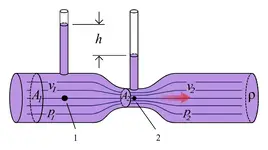
IMG_7118.webp
 
I was just using the pellets to get the 1st several rounds out after swapping out the reg and opening the ports. Something cheaper to shoot meaningless shots to get the reg to settle in. Slug's are my priority, and I'm sticking with 30-32 grain.

I had a good text chat with @Airgunandy89 yesterday. His thought's of what I'm seeing are the first things that make sense to me. He told me that when you open up the ports you also need to lighten up the poppet return spring. That's is why I'm seeing the valve floating, resulting in the large variation in fps between shots with no changes. Also why the sound is all over the place. That could also be why @Cantona256 is seeing better results at 2900psi. I will try that, along with a few other pointers. Andy also said that if the aluminum in the receiver wasn't ported to match there is sill a bottleneck right in the middle. That may be another reason why a really high psi is working as it could be enough to overcome the narrower channel in the receiver and the return spring at the same time.

I've decided to make this a project gun for testing. I've got a new 250Z in Veil on the way. I'm going to dial that one in without any port mods so I have something reliable when I need it. Then I'm either going to tinker with the original myself or send it up to @Airgunandy89 to use as a test bed. I just don't have the time to be testing out these changes, learning as I go because I don't have the knowledge set to understand the results I'm seeing. So having something reliable is my priority right now. If Andy doesn't want to use it for testing then as I have time I'll tinker with it and have fun learning at my pace and at the same time, when the yotes are making a racket at 3am I'll have a gun that will do what I want it to and know it will be quiet and the slug will go where I want it to.

I have learned that this is all a balancing act. The stock gun, while not the most efficient in .25, is well balanced. As changes are made in one area you upset the balance in another, and you need to figure out what area(s) of the gun need to be tweaked to right the balance... as you continue down the rabbit hole.
Also using pellets to test for slug tuning doesn’t work. Even if they are the same weight they do not have the same of amount of contact surface and basically have the exact opposite ballistic profile.

Additionally pellets will lead in the grooves in a way that can affect slug accuracy.

Utah Airguns is having a massive sale right now. I just got 500 .30 cal slugs for my EQ for $50z….

Order some cheaper lighter weight slugs and test with those. It will make you’re life a lot easier.
 
Also using pellets to test for slug tuning doesn’t work. Even if they are the same weight they do not have the same of amount of contact surface and basically have the exact opposite ballistic profile.

Additionally pellets will lead in the grooves in a way that can affect slug accuracy.

Utah Airguns is having a massive sale right now. I just got 500 .30 cal slugs for my EQ for $50z….

Order some cheaper lighter weight slugs and test with those. It will make you’re life a lot easier.
I wasn't even testing/tuning with the pellets. Just blind firing into the hill, then I followed it up with two of the cleaning wads before loading slugs.
 
Yeah most of that makes sense.

I disagree about the bottle neck though. Look up the Venturi effect. Porting it doesn’t increase the volume of the air being used as it all contained in front of the valve. Porting it allows it to escape the valve easier. Because it’s is a restricted space not only does the air not slowdown but the velocity increases as the pressure drops.

Speed increases, pressure decreases but ultimately there is a conservation of mass flow rate and momentum. Mass flow rate being the important factor here… basically it’s the reason why a bigger plenum can increase power at a lower pressure that the smaller plenum. Lower pressure but higher volume so ultimately there is more actual mass behind the projectile.

I’m glad to hear you were finally convinced to try putting be reg at 2900. I’m surprised it was this hard since you’re basically doing my tune and I’ve been saying for like two weeks to try upping it lol… can’t wait to hear the results.


“The Venturi effect describes how a fluid's speed increases and pressure decreases as it passes through a constricted area, like a funnel. The effect is based on the principles of mechanical energy conservation and continuity. Explanation: Fluid flow rate increases in the constricted region to maintain the mass flow rate and conserve momentum throughout the flow. The increased speed comes from a reduction in the fluid's static pressure.“

View attachment 15140
Venturi's are an area that I do have considerable knowledge of, as well as plumbing for flow. I was heavily in the RC hobby in the 90's using 2-stroke engines with methanol and nitromethane for fuel. I also currently use Mazzei Injectors on aquarium skimmers. Venturi's have a taper to them, so the mass is continually forced in the direction of pressure. Just past the point of most constriction and the orifice starts opening up is a pressure drop that acts as a suction to draw a gas or fluid in. Also, venturi's do not like back pressure on the output side and are designed for a constant flow over time, not a sudden burst without continued flow. Conversely, if there is no taper and just a flat faced hole you create back pressure and turbulence to the flow as the molecules slam into the flat area around the hole/orifice.

Constricting Hole (Orifice):
  • Design:
    An orifice is a simple hole or constriction in a pipe or channel. It causes a sudden change in flow area.

  • Effect on Flow:
    Similar to a Venturi, the fluid accelerates through the hole, and the pressure decreases. However, the sudden constriction creates more turbulence and a larger pressure drop, with less pressure recovery after the constriction.

  • Advantages:
    Simple and inexpensive to manufacture and install. Can be used for flow control or to create pressure differences.

  • Disadvantages:
    Higher pressure drop, greater energy loss, and potential for increased turbulence compared to a Venturi.​

Between what Andy texted me yesterday and your venturi reference above, I think I may have just had my "Ahh Haa" moment in all of this. I maybe completely off base here. But what I believe is happening is that instead of an even laminar flow of the air, there is a set of pressure waves created and the low pressure after the first wave is creating the valve flutter. As the pressure rebounds after the drop, I'll call that the 2nd wave, some of that air escapes before the poppet slams shut. The balance is off. Brute force "2900psi" may be able to counteract the imbalance, but the inefficacy remains thus limiting the adjustment window available. The addition of the plenum may also be the best solution as there would be a larger volume of consistent pressured air available and the poppet could close before the 1st wave has finished and the pressure drop occurs. With that volume there might not even be a set of waves. Regardless opening up the receiver to the same diameter of the ports (or close to it) is still the most efficient for the gun.

I'd love to hear everyone's thought's on this to see if I'm even remotely on track with this line of thinking.
 
Venturi's are an area that I do have considerable knowledge of, as well as plumbing for flow. I was heavily in the RC hobby in the 90's using 2-stroke engines with methanol and nitromethane for fuel. I also currently use Mazzei Injectors on aquarium skimmers. Venturi's have a taper to them, so the mass is continually forced in the direction of pressure. Just past the point of most constriction and the orifice starts opening up is a pressure drop that acts as a suction to draw a gas or fluid in. Also, venturi's do not like back pressure on the output side and are designed for a constant flow over time, not a sudden burst without continued flow. Conversely, if there is no taper and just a flat faced hole you create back pressure and turbulence to the flow as the molecules slam into the flat area around the hole/orifice.

Constricting Hole (Orifice):
  • Design:
    An orifice is a simple hole or constriction in a pipe or channel. It causes a sudden change in flow area.

  • Effect on Flow:
    Similar to a Venturi, the fluid accelerates through the hole, and the pressure decreases. However, the sudden constriction creates more turbulence and a larger pressure drop, with less pressure recovery after the constriction.

  • Advantages:
    Simple and inexpensive to manufacture and install. Can be used for flow control or to create pressure differences.

  • Disadvantages:
    Higher pressure drop, greater energy loss, and potential for increased turbulence compared to a Venturi.​

Between what Andy texted me yesterday and your venturi reference above, I think I may have just had my "Ahh Haa" moment in all of this. I maybe completely off base here. But what I believe is happening is that instead of an even laminar flow of the air, there is a set of pressure waves created and the low pressure after the first wave is creating the valve flutter. As the pressure rebounds after the drop, I'll call that the 2nd wave, some of that air escapes before the poppet slams shut. The balance is off. Brute force "2900psi" may be able to counteract the imbalance, but the inefficacy remains thus limiting the adjustment window available. The addition of the plenum may also be the best solution as there would be a larger volume of consistent pressured air available and the poppet could close before the 1st wave has finished and the pressure drop occurs. With that volume there might not even be a set of waves. Regardless opening up the receiver to the same diameter of the ports (or close to it) is still the most efficient for the gun.

I'd love to hear everyone's thought's on this to see if I'm even remotely on track with this line of thinking.
You’re over thinking it.

You’re literally doing my tune and I’ve never had the issues you’re having. For your conclusion to be correct it would stand to reason that I should have have even a tiny bit of what’s going on with yours… are you positive you got your bevel stack right after doing the reg?

And for the record after finishing my port job I started off at 2500psi and moved up so I didn’t just hit the 2900psi magic spot and skip the turbulence zone.

I also don’t think any conclusion can be drawn at all until you up the reg and see if that fixes it.

As for the Venturi… what back pressure on the output side? Once it hits the thimble it just continues out down the barrel… and while I agree with your assessment your approach is from the RC perspective where it’s operating constantly. I also didn’t say that what we have in the gun is efficient. I just pointed out that the idea of an air “choke” point doesn’t make sense. Furthermore I back that up by telling you to watch the 802_airhead video where he shows his power tune in .22 cal… my tune does more power over the “box” says for Fpe by comparison and he also ported his block. He also says he gets 2 mags per fill which mine does as well. So yeah don’t think that one little “choke point” has much of an impact effect other than possibly make the air more turbulent.

Finally, Andy is definitely a boss when it comes to this stuff, but I think you posted before or Pm’d me that he has the same issue taking his reg above 2500psi. Did he fix the issue? Also, from what he’s stated his style of shooting is a heavy slug at whatever speed is most accurate. Which makes sense when you hunt deer with an Air Force Texan. But I’m telling you right now that a 40gr slug doing 850fps/860fps probably won’t expand when you shoot something with it. That’s fine for deer because you’re gonna track it anyways. You gonna track coyotes at night?

From my perspective, and with no disrespect, it sounds like you’re asking a guy to fix a tune he didn’t come up with in a style that he doesn’t normally set his gun up in… and a problem he already has on his guns…. 🤷‍♂️ good luck.

I’ve got the EQ to play with anyways. I’ll update when I get the plenum in and decide on my final tune. But I’ve said everything I feel like saying on this subject.
 
You’re over thinking it.

You’re literally doing my tune and I’ve never had the issues you’re having. For your conclusion to be correct it would stand to reason that I should have have even a tiny bit of what’s going on with yours… are you positive you got your bevel stack right after doing the reg?

And for the record after finishing my port job I started off at 2500psi and moved up so I didn’t just hit the 2900psi magic spot and skip the turbulence zone.

I also don’t think any conclusion can be drawn at all until you up the reg and see if that fixes it.

As for the Venturi… what back pressure on the output side? Once it hits the thimble it just continues out down the barrel… and while I agree with your assessment your approach is from the RC perspective where it’s operating constantly. I also didn’t say that what we have in the gun is efficient. I just pointed out that the idea of an air “choke” point doesn’t make sense. Furthermore I back that up by telling you to watch the 802_airhead video where he shows his power tune in .22 cal… my tune does more power over the “box” says for Fpe by comparison and he also ported his block. He also says he gets 2 mags per fill which mine does as well. So yeah don’t think that one little “choke point” has much of an impact effect other than possibly make the air more turbulent.

Finally, Andy is definitely a boss when it comes to this stuff, but I think you posted before or Pm’d me that he has the same issue taking his reg above 2500psi. Did he fix the issue? Also, from what he’s stated his style of shooting is a heavy slug at whatever speed is most accurate. Which makes sense when you hunt deer with an Air Force Texan. But I’m telling you right now that a 40gr slug doing 850fps/860fps probably won’t expand when you shoot something with it. That’s fine for deer because you’re gonna track it anyways. You gonna track coyotes at night?

From my perspective, and with no disrespect, it sounds like you’re asking a guy to fix a tune he didn’t come up with in a style that he doesn’t normally set his gun up in… and a problem he already has on his guns…. 🤷‍♂️ good luck.

I’ve got the EQ to play with anyways. I’ll update when I get the plenum in and decide on my final tune. But I’ve said everything I feel like saying on this subject.
I'm not trying to argue or make you feel like I don't appreciate the help you've given me. Maybe I am over thinking it but I'm trying to understand why I'm seeing the results I am.

Tonight when I get home, if it's not still raining, I plan to try going straight to 2900 to 3000 psi and see what happens. I'm having a hard time wrapping my mind around being at 960fps at 2600-2700psi and not being between 980-1000fps at 2900psi and a hellofa lot more noise. But I will try nonetheless.
 
@Cantona256 Here you go.
20250804_184809.webp

While the gun was consistently quieter the fps were all over the place and went down, not up.
All shots are AEA 30.2, single loaded and listed in order. 15 seconds minimum between shots with a half minute or so average. Some over a minute. The gun being quiet, I believe, tells me that the valve closed before the slugs left the barrel but the deviations mean there has to be some flutter going on, right?

858.6, 907.7, 842.2, 874.4, 857.4, 888.2, 843.4, 827.6, 880.6, 818.8, 801.9, 790.6, 808.2, 879.3 and 840.0.

Recharged and let it rest for 15min while I ate dinner.
829.8, 857.4, 828.7, 855.0, 851.5, 827.6, 876.8, 899.8, 825.4, 863.4, 823.2, 853.9, 815.6, 764.2, 833.2, 791.6, 795.7, 784.6, 792.6 & 789.6. The regulated gauge still shows slightly less than 3000psi.

First and foremost, I'm not blaming anyone. I've done something to mess it up, no one else. It didn't act like this when I got it. Yes, I'm sure the ports are lined up correctly. No, the poppet spring isn't broke and the valve looks to be in good shape. There is a brand new regulator in the gun.

As of now I'm done messing with this one for a while. I'll happily pack it up and send it to you to see if you can figure were I messed it up.

The new one will be here Friday and I'm just going to put the stiffener, hammer & trigger kits in it and work off the rest of the platform stock while I wait for the plenum.
 
Last edited:
Well, I have been staying out of this one, but looking at your numbers I don't think that they could vary like that due to any fixed port or air pathway. They look dynamic. If I was seeing a string like that I would take the regulator back out and use 2000 - 1000 grit sandpaper on the bellville washers in the stack, one by one, and make sure everything was smooth, clean, and lubed and try again. I'd check that the hammer was smooth, and dry too. I run my hammers (and hammer springs) using just graphite, nothing to gum up or stick when hot or cold, and never had a problem. There is only one thing that moves in the system so I would think it would have to be that. Any velocity differences should be bell curve like to match the pressure changes, but not all over the place. Unless, of course, you have water in your air supply. That can really screw things up, or maybe too much silicone oil traveling through everything. Some people put a drop of silicone on their fill nipple when they air up, and it can build up too, depending on how crazy you get doing it. I only do that once every ten or so fill ups and my internals always look pretty good. And check that your barrel isn't getting leaded up too. Clean your barrel between strings. You're not checking accuracy, just consistency, at this point.
 
Yeah, thinking on it, I would run a bore brush down the barrel and some JB. If you have a rough spot problems are always going to show up in your strings.
 
Yeah, thinking on it, I would run a bore brush down the barrel and some JB. If you have a rough spot problems are always going to show up in your strings.
Here's where I am with the internals beyond the valves. Please let me know if you think I should just tear it down again and do a full cleaning.

About a month ago I had it fully apart and ran a brush and patches with JB. I took the reg apart, lightly sanded the washers with 1500 then 2000 and lightly lube them with just a little between my fingers. Replaced an oring on the center adjuster and reassembled. The hammer was lightly sanded and a drop of lube to very thinly coat it. I also lightly stoned the sear just to the point the grittiness is gone.

Sunnday I put a brand new reg in. I disassembled it and removed all the stock oil. I rubbed each of the washers clean and lightly lubed them but didn't polish. Didn't feel any burrs or biting edges. Reassembled lubing the orings and installed. This reg has under 75 shots on it.

The barrel has less than 500 rounds since cleaning and I have fired cleaning patch plug through it a few times.

I thought maybe I got the washer stack wrong on the 1st one, but this second reg they went back in the same order and orientation as they came off. I also matched back to the 1st one to verify I did it right on that one.

I know I've fubar'd something somehow.
 
Here's where I am with the internals beyond the valves. Please let me know if you think I should just tear it down again and do a full cleaning.

About a month ago I had it fully apart and ran a brush and patches with JB. I took the reg apart, lightly sanded the washers with 1500 then 2000 and lightly lube them with just a little between my fingers. Replaced an oring on the center adjuster and reassembled. The hammer was lightly sanded and a drop of lube to very thinly coat it. I also lightly stoned the sear just to the point the grittiness is gone.

Sunnday I put a brand new reg in. I disassembled it and removed all the stock oil. I rubbed each of the washers clean and lightly lubed them but didn't polish. Didn't feel any burrs or biting edges. Reassembled lubing the orings and installed. This reg has under 75 shots on it.

The barrel has less than 500 rounds since cleaning and I have fired cleaning patch plug through it a few times.

I thought maybe I got the washer stack wrong on the 1st one, but this second reg they went back in the same order and orientation as they came off. I also matched back to the 1st one to verify I did it right on that one.

I know I've fubar'd something somehow.
The only thing that I would have done differently is absolutely no wet lubricants on the hammer or the trigger parts and springs. I rub on dry graphite, that's it. Inside where the high pressure air is you can use what you think is best, just a light coating, like you did. I forgot if you got a bore scope or not but it would certainly be nice if you could check your bore. Barring that, I would run a brush down the barrel of a gun that wasn't consistent, and do the JB thing again, 500 rounds can be a lot if you're using slugs. The breech oring is a pain, so I would pull the barrel to do it. If you do take it all apart again I would do the bellville washers with 1500grit sandpaper, why not?! Be sure. I know, easy for me to say, but you would always question it later.
 
I'm going to get started breaking it down tonight. I'm not gonna shoot anymore like this anyway. Might as well dig in and go though everything again.

I don't have any graphite, would a dry moly spray work?
 
I'm going to get started breaking it down tonight. I'm not gonna shoot anymore like this anyway. Might as well dig in and go though everything again.

I don't have any graphite, would a dry moly spray work?
I have tried it, and not impressed with how it sticks. It has stiction enough to stick, I don't like that. You can get graphite at any hardware store in the key/lock section, you could even use a pencil.
 
I had a good text chat with @Airgunandy89 yesterday. His thought's of what I'm seeing are the first things that make sense to me. He told me that when you open up the ports you also need to lighten up the poppet return spring.
What's the purpose of lightening the poppet return spring? Seems to me it would need to be heavier to prevent it from popping back open.
 
I went through both guns with a fine tooth comb this week. I'm hoping I got it right this time. I did get some graphite and the hammers slide like butter now. Much better than the bit of lube I used last time. @Pumacarl that very well could have been what was my problem. I did go over the regs too and after watching what vids are available I believe I did a better job this go around.

I've got some stuff to do today. But I will be testing later. Both are charged and ready for when I get back.
 
Last edited:
What's the purpose of lightening the poppet return spring? Seems to me it would need to be heavier to prevent it from popping back open.
When the hole is smaller there is more pressure than when it is made larger so it actually takes less of a spring to close the poppet if you even need one at all. The running cycle air pressure itself will keep the poppet closed, a spring will make sure that it always stays in place , even if you air down the gun. I have tried not using a return spring on my P15 and it did not do that much for me besides making me nervous about airing it back up from empty. There are a lot of other variables to take into account, such as, if the hammer is actually resting on the poppet than the stiffness of the return spring can stop hammer bounce, or create it. If you free flight your hammer you can prevent that though, but there is many scenarios where you can use the dynamics of the relationship to tune a tighter es, or use less air, etc. Fun stuff!
 
I think I've got things back where they should be. Fps consistency is much closer.
Now I need to figure out the dwell and how to dial it down. It sounds, to my untrained ear, that the valve is still open just slightly past the point the slug is out.
 

Create an account or login to comment

You must be a member in order to leave a comment

Create FREE account

Create a FREE account on our community. It's easy!

Log in

Already have an account? Log in here.

Trending in this forum

Back
Top